

Welcome to the course! English 205 will help you practice and develop your critical thinking and critical writing skills as you expand your knowledge of academic discourse and your use of rhetorical strategies. The course is all about sharpening your ability to engage with language itself more critically as we explore and write about complex ideas, current issues, and enduring questions. Throughouth, we will emphasize the ways that rhetoric, literacy, culture, technology, and ideology shape our experiences and our identities.
We will also, of course, discuss a number of the many social, cultural, and political challenges we continue to face as human agents performing on the larger world stage. Success in the course will rely on your ability to engage these ideas objectively and academically.
Scroll down to learn more about me, the course, and what you can expect this semester. I’m looking forward to getting started.

How this course is structured

- This is a 16-week course, taught in person with set meeting times, or fully online. Check the calendar for specific offerings.
- Zoom meetings are almost entirely devoted to collaborative activities, discussions, and explanations of assignments. I invite you to be, but you are not required to be on video.
- On Mondays you’ll be able to access modules on Canvas that contain a mix of readings and videos, study guides, writing tasks you’ll need to work through and complete by Sundays (@11:59 p.m.).
- My courses contain gamified elements and make use of multimodal texts (Graphic Novels, for example) as well as traditional college reading materials.

Our Goals for the Course
By the end of the semester you should be able to:
- Read complex texts critically and apply the principles of critical reasoning to specific research topics from various media and commonly accepted knowledge.
- Identify and distinguish between statements of fact, opinion, premises, assumptions and values in any text—in addition to learning how to synthesize information effectively into your own writing.
- Investigate assumptions and ideological viewpoints, claims, support, reasoning, context, rhetorical moves and discourse conventions specific to any moment of communication.
- Understand how language use constitutes a form of social action that shapes perception and ideology; in addition to being able to analyze the motivation behind any such action.
- Engage in the sustained, critical discussion of complex topics in well-developed writing that is organized, provides effective evidence and logical reasons and support for major points.
- Recognize, analyze, and explain in clearly written English how the rhetoric of others (as well as your own) creates appeals and how language and power dynamics are produced in any text.

My Teaching Philosophy
My passion for teaching is grounded in my love of rhetoric. That is, in an understanding of the power and impact of words in the world. Rhetorical theory, both ancient and modern, plays a central role in all of my courses, because our focus is always on words.
I believe wholeheartedly in taking personal agency for ones own learning, which means that I will serve mostly as a mentor/coach assessing your growth as you develop your reading, writing, and critical thinking.
I believe that the best approach is one that blends a variety of texts, forms of assessment, and collaborative activities. I understand that people all learn at their own rhythm and pace– and in their own style. I also understand that everyone brings a different set of skills to the classroom that will factor into any projects assigned for the course. I plan for this accordingly.

Setting Expectations
What I Will Expect from You
- You strive to be an active participant in this course, meaning you hold yourself accountable for attending required Zoom meetings, participating in asynchronous activities, and meeting deadlines and due dates.
- You will produce thoughtful, insightful writing that synthesizes the ideas, themes, and concepts we discuss in class with your own unique views and critical stances.
- You will approach readings and activities with an open mind, meaning you do not jump to conclusions based on preconceived notions, assumptions, or biases you may hold.
- You strive to regularly contribute to collaborative activities to ensure other members of the community have ample opportunity to read/listen, reflect, and respond to your ideas.
- You will do your best to have patience with technology. There will be hiccups, expect them. We will get through them together.
- You will maintain an open line of communication with me so I understand how to support you.
- You will treat your peers with dignity and respect.
- You will treat yourself with grace. Expect to make mistakes. You are human and you are stressed.
What You Can Expect from Me
- I will provide you with a clear, organized course that is designed to ensure you meet our course outcomes in a meaningful manner.
- I will provide a variety of assignments and degrees of difficulty to ensure your learning needs are met.
- I will assign a variety of readings and multi-modal texts that offer a wide range of perspectives on any ideas we discuss in class.
- I will do my best to foster a supportive and safe environment for you to share and discuss ideas with your peers.
- I will reach out to you when I sense that you need support.
- I will treat you with dignity and respect and be flexible to support your individual needs.
- I will hold you accountable to the expectations established in the course syllabus and described under the course guidelines.
- I will make mistakes—just bear with me knowing that I will treat each one as a learning opportunity and adapt as necessary .

Tips for Success
- Be proactive. Log into our course every Monday to preview the new module. Carefully read the Module Overview page, which includes the week’s learning objectives and a list of readings and assignments.
- Learn to Question. Do your best to ask new and creative questions to open up breakthrough fields of exploration.
- Make (unexpected) connections. Feel free to draw references or to make connections between course material and the media you consume on a daily basis.
- Explore information and data in the library catalogs, databases, and other humanistic laboratories.
- Practice Joy Writing (learning to enjoy the practice of writing)
- Begin to think of thinking as “handiwork,” an artisanal activity
- Engage in Open-ended Thinking (exploring problems without solutions)
- Reflect actively. Make it a habit for learning.
- Consider how storytelling itself is a form of argument.

Required Readings

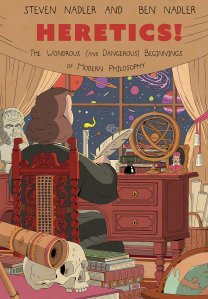


Week 1 – Getting Started
Preparing for Week 1
The first week is all about setting course expectations, establishing goals, and building our learning community with brief introductions.
Due Dates for Week 1
- Complete your Week-one Check-in. In “Preparing for Week 1” Module on Canvas, complete the steps required, including downloading, signing, and submitting your Course Contract. This is our “check-in” assignment so that I know that you plan to remain enrolled in the course. Along with the contract, you’ll submit a short survey so that I can get to know you a little better.
Resources
Make sure you have access to the applications linked below. You can access each through a web browser, through I’d strongly encourage you to download the mobile versions as well.


 Professor Gomez